
I left Uber in 2017 heartbroken. I had been torn away from an idea and a movement that I had poured my life into. I had lost my bearings as I found the world increasingly operating by the rules of perception not reality.
It was only days after the death of my mother and the near death of my father in a boating accident when an investor decided to come out from the shadows and exploit this vulnerable moment to wrestle control of this idea away.
I bled, but I did not perish. I got back up and fought my way back into the arena, back to my calling. Back to building.
Digitizing the Physical World is my life’s work. After Uber I started building City Storage Systems. The obscure name was a nod to Atoms-based computation with a focus on Real Estate. Our first computer was a Food computer - digitized manufacturing, real estate and logistics for food.
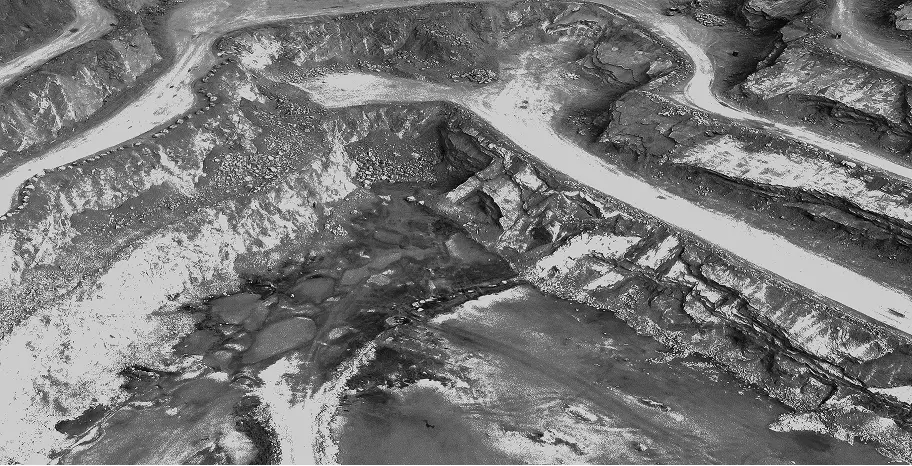
Today we expand our physical world computation portfolio to the Mining and Transport industries and rename the company Atoms.
Atoms Mission
01
Physical automation to transform industry and move the world
Our Computers
02
Atoms Food:
Infrastructure for better food.
Atoms Mining:
More productive mines to power earth’s industries.
Atoms Transport:
Wheelbase for robots.
Valuable Unknown Truths
03
In the battle against entropy, humans optimize for finding valuable unknown truths. Because when you are good at discovering valuable unknown truths, you know things others don’t know. And when you are good at knowing things others don’t, you can do things that others can’t.
An organization of valuable unknown truth seeking is able to do more and more things that others can’t do. That organization will find that it can bring change and progress at accelerating speeds, faster and faster as its knowledge advantage grows.
That change is God’s work - human progress in service to the battle against entropy, dust, and death. Civilization.
Past is Prologue
04
Human history is the recording of this fight and the advance of civilization. From basic tools for survival to levered machinery that humans operate as industry emerged.
Software has automated tasks of language and math, but the complete automation of the physical world – autonomy – remains largely untouched territory, the principal unlock to the next era of progress and abundance. History refers to this kind of moment of radical progress as a Golden Age.
Everything in our world, in our cities, in our civilization – look around you – is mined or grown – manufactured and moved.
The next Golden Age will be upon us when the means of growing, mining, manufacturing and moving physical things becomes fully divorced from human labor.
Abundance
05
Why a Golden Age? Because when the means to make and move is reduced to computation, minerals and energy alone, when the machines that make machines that make things are also autonomous, the organization of human capital becomes superhuman. Efficiency and value emerges via self-improving software while we sleep. The ability to produce at an unfathomably large scale is the only logical result.
When Tesla has a “lights out” manufacturing plant and the raw materials are brought in by autonomous Tesla freight vehicles, and the manufactured cars then autonomously travel to their new owners’ homes…what will that cost? It will simply be the cost of the raw materials and the energy to produce the final product. And what about when Amazon warehouses are autonomous, and supplied by autonomous manufacturers of the goods they sell, and the goods delivered by autonomous delivery vehicles to your home?
The Inevitable Destination
06
The Golden Age is close at hand but the journey ahead still has its challenges. Physical world autonomy requires AI for the physical world. This kind of intelligence requires computation we haven’t invented, at an efficiency we can’t yet fathom with deep learning models to understand and act in the physical world that don’t yet exist.
But Moore’s law (squared) is our friend. The cost per unit of intelligence is going down in price by 90% per year. Total capabilities and general intelligence have increased nearly 1000-fold over the last 3 years. Hardware, software and manufacturing productivity will continue to compound each other to ever increasing speeds of progress. Though we’re less than one millionth of the way there, the inevitable destination is the singularity – superhuman intelligence and efficiency. Until then, Abundance will be creating more jobs, not less.
Land and Expand
07
Where do the materials and minerals come from? Where do we manufacture? Where do we harvest and store energy? Land as a critical resource and the competency of real estate development of that land are dramatically underappreciated ingredients for Physical world AI.
Producing more minerals that power the chemistry for state change and the materials for machines to manufacture will be an urgent imperative. Acquiring and developing the land that produces these minerals and materials is a critical competency.
Digitizing the Physical World
08
Once you have the materials and energy for the manufacturing of “progress machines”, what kinds of machines are they and what do these machines do? The imperative is movement and action in the physical world with a software-like perspective on physical automation – think of it as treating atoms like bits or what we like to call Digitizing the Physical World.
It means approaching physical world problems like software problems – building atoms-based computers. The core computing resources: CPU, Storage, Network for the physical world – digitized manufacturing, real estate and transport.
I’ll use an old Uber analogy to bring this framework to life. In any given city, Uber has 10’s of thousands of sensors on the road. Those sensors are the uber drivers’ phones. Those phones track the exact location and movement of Uber vehicles in the city. Because of how they move, Uber should know the real-time state of every traffic light in the city and could even know where most of the trash-trucks are at any given moment - ubers also get stuck behind trash trucks.
Now when you request a ride, Uber can dispatch to any nearby Uber vehicle (Step 1.), but it should be able to predict which vehicle is likely to get stuck behind a trash truck, or which vehicle might get in a bad traffic light cycle on its way to picking you up (Step 1 and Step 2.). Maybe it should dispatch to a car but route that car around the trash truck so that it can get to you 3 minutes faster (Step 3)? The car gets to you faster, you get to the destination faster, and Uber became a mini-time-machine because it effectively digitized the physical world.
This framework applies to most things that move and act in our cities. The efficiency gained, the time saved, the value created is the upside of the progress machines that digitize the physical world.
The Physical AI Tech Stack
09
The tech stack for industrial progress machines is not for the faint of heart. The Physical AI tech stack is daunting. It requires a polymath organization spanning many domains from sensors and compute to manufacturing, chemistry and real estate. No single company has to do it all, but the more cross stack competence, the more likely that company can earn its keep.
Gainfully Employed Robots
10
The critical early decision in Physical AI: should you make generalized robots or specialized ones? To humanoid or not to humanoid, that is the question. Humanoids will handle a large diversity of tasks with an anthropomorphic design. Good for low scale tasks in bespoke human-designed spaces.
A robotic housekeeper needs to vacuum, dust, fold clothes, wash dishes, throw away trash, clean toilets, put objects back in their place. A huge diversity of low volume tasks, where everyone’s home has a bespoke design and inconvenient architecture (e.g. stairs). This is a humanoid’s job.
But what if you had an industrial kitchen and needed to make 1000 pancakes an hour? I couldn’t think of a worse approach than a humanoid. A specialized machine that makes pancake batter at a large scale, with a heated iron apparatus that can cook 100 pancakes at a time to golden brown perfection. No awkward robotic arm flipping pancakes – instead, precision cooking, ultra-speed and throughput, efficient use of space designed for the machine. This is where specialized robotics shine.
Builders need to be careful of the human fascination with seeing mechanized versions of us. Every humanoid demo or launch in recent memory usually starts with a humanoid dance show or martial arts display. The recent humanoid Olympics in Beijing highlighted many advances in humanoid development. I watched the half-marathon and couldn’t help but think how much better it would be if they just had wheels.
Gainfully employed robots are the machines best suited for the job at hand, that can make a living doing it.
"I'm Back."
11
I often get the question from entrepreneurs or executives, “What should I do next?”
My answer has always been “become deeply self aware and when the right thing comes, you will know it. If you know yourself, your next thing, your new idea, your work soulmate will reveal itself.”
When I told my friends, family and colleagues about my plans for what was next, they were really excited that I was “coming back.”
The thing is, I never left.
travis kalanick